What Normal Bicarbonate With a High Anion Gap Means
What the anion gap measures
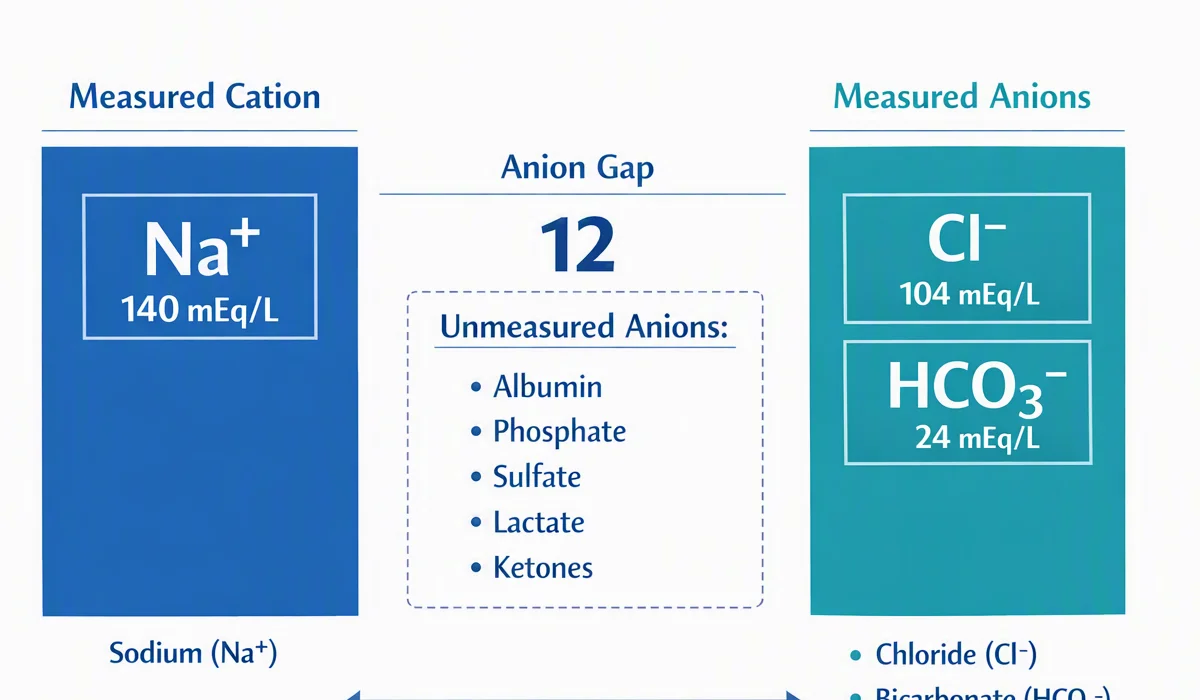
The anion gap is a calculated value that helps doctors assess acid-base balance and the overall distribution of electrolytes in the blood. It is usually derived from the relationship between sodium, chloride, and bicarbonate, with the result showing what is left unmeasured in routine blood chemistry. In simple terms, the anion gap gives indications about whether there may be extra acids in the body that are not obvious on a standard lab result.
Because the body maintains a tightly regulated buffer system, changes in the anion gap can signal a metabolic disorder before other values look clearly abnormal. A high anion gap often indicates acid accumulation from an underlying cause such as lactic acid, ketones, or certain toxins. That is why lab interpretation of this number matters: it can reveal a type of hidden acidosis that may not yet have changed the bicarbonate much.
Most routine reports include a basic metabolic panel, which provides the ingredients used for anion gap calculation. In some settings, an electrolyte panel may provide similar information. The values for sodium and chloride are central to the calculation, and the bicarbonate value, sometimes reported as serum CO2, helps estimate how much base is available in the blood. When the gap is high, clinicians think carefully about the clinical significance rather than focusing on one number alone.
How to operate an Anion Gap Calculator
An Anion Gap Calculator is a straightforward tool that helps estimate the gap from common lab numbers. In many situations, it uses https://anion-gap-results691.urbanvellum.com/posts/how-lactic-acidosis-impacts-the-anion-gap sodium, chloride, and bicarbonate from a blood test. Some calculators also let input for albumin, because low albumin can leave the result appear lower than it truly is. This is where considered medical review becomes important: the calculator is only as useful as the numbers entered and the context in which they are interpreted.
When using an Anion Gap Calculator, start with the basic metabolic panel or electrolyte panel. Check whether the bicarbonate is listed as bicarbonate or serum CO2, since many labs use serum CO2 as a surrogate for bicarbonate. Then confirm the sodium and chloride values. If albumin is low, the corrected anion gap may be more precise than the unadjusted result.
This is a useful example of how lab interpretation and diagnostic workup work together. The calculator can reveal a pattern, but it cannot tell you the underlying cause. A high gap with normal bicarbonate may still point to an evolving problem, especially if symptoms or other blood chemistry findings suggest acid-base status changes. The calculator is best used as a starting place for evaluation steps, not a final diagnosis.
For best results, remember these important points:
- Rely on current serum values rather than old results.
- Verify whether bicarbonate is reported as bicarbonate or serum CO2.
- Consider albumin before accepting a “normal” gap at face value.
- Interpret the result alongside symptoms and the rest of the blood chemistry.
What normal bicarbonate with increased anion gap can indicate
A normal bicarbonate with a increased anion gap often suggests there is a process causing extra acid to build up, but the bicarbonate has not yet decreased much or is being maintained by a compensation mechanism. This finding can appear in early metabolic acidosis, before the lab changes become more obvious. It can also happen if one disorder is counteracted by another, creating a picture that looks less severe on the surface than it really is.
One major concern is high anion gap metabolic acidosis. This term describes acidosis caused by extra acids, such as those seen in lactate-related acidosis or ketone-related acidosis. In these conditions, bicarbonate may still be in the reference range if the problem is early, if there is partial compensation, or if another process is pushing bicarbonate upward at the same time.
Acidosis from lactate can develop when tissues are not getting enough oxygen or when the body is under severe stress. Ketoacidosis can occur when ketones accumulate, often during fasting, illness, or diabetes-related insulin deficiency. Toxic alcohols are another important cause of a high gap. These substances create acids after being metabolized, and the bicarbonate may lag behind early in the course.
So, normal bicarbonate does not necessarily mean the acid-base picture is normal. It may indicate:
- early buildup of acid
- partial compensation
- more than one acid-base problem
- an abnormal anion gap that has not yet lowered bicarbonate
The key is to interpret the result in the broader clinical significance of the patient’s presentation, not as an isolated number.
Typical reasons underlying this test pattern
A number of conditions can lead to a elevated anion gap even when bicarbonate appears normal. One typical cause is renal failure, where the kidneys cannot remove acids properly. As acids accumulate, the gap rises. Depending on timing and compensatory effects, bicarbonate may still seem acceptable on an early or partial test.
Diabetic ketoacidosis is a further important cause. In this condition, the body produces large amounts of ketones, which raise the anion gap. Although bicarbonate is often low in classic cases, it may be near normal early on or affected by another acid-base process. That is why serum ketones and glucose are often ordered when the pattern is suspicious.
Sepsis can also lead to lactic acidosis because poor tissue perfusion and metabolic stress raise lactate production. In some patients, this creates a high anion gap before bicarbonate drops significantly. The lab pattern can be subtle, especially if other factors are influencing the blood chemistry.
Salicylate poisoning is a classic mixed acid-base picture. Salicylates can cause a combination of respiratory and metabolic effects, which means bicarbonate may not behave as expected. This is one reason clinicians pay close attention to the full acid-base status, rather than relying on a single lab value.
Other important toxins include toxic alcohols such as methanol and ethylene glycol. These substances can create a dangerous high gap metabolic pattern, sometimes before all routine values become abnormal. A careful symptom assessment and timely medical review are essential when exposure is possible.
Why bicarbonate may still look normal
There are several reasons bicarbonate may stay normal despite a high anion gap. A key one is compensation. The body steadily adjusts breathing and kidney function to preserve acid-base balance. If a problem is developing slowly, the system may temporarily keep bicarbonate in the normal range even while acids are accumulating.
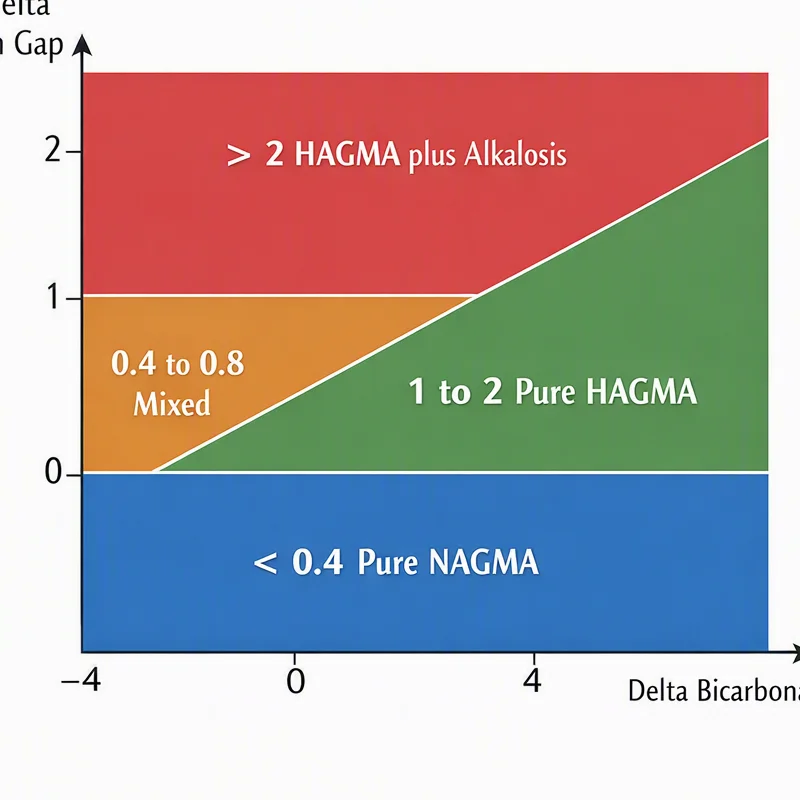
Another reason is a mixed acid-base disorder. In this situation, two processes are happening at the same time. For example, a person may have a high anion gap metabolic process plus respiratory alkalosis, which can push values in opposite directions. The net effect may be a bicarbonate level that looks deceptively normal, even though the patient has significant acid-base disturbance.
Early metabolic acidosis is also a typical explanation. In early stages, the extra acid may be reflected first in the anion gap, while bicarbonate has not yet dropped enough to leave the reference range. This is one reason a “normal” bicarbonate should not end the evaluation if symptoms, history, or other labs suggest a problem.
In practical terms, a normal bicarbonate does not always mean the buffer system is stable. It may mean the body is still maintaining a temporary balance. That is why clinicians combine the lab pattern with the rest of the evaluation, including the timing of symptoms, possible exposures, and the full diagnostic workup.
How albumin affects the anion gap
Albumin is one of the main unmeasured ions that changes the anion gap. When albumin is reduced, the measured anion gap can look falsely normal or only somewhat elevated. This is called hypoalbuminemia, and it can lead to confusing laboratory interpretation if the albumin level is not factored in.
To account for this, clinicians may calculate a corrected anion gap. The correction helps estimate what the gap would seem if serum albumin were normal. This can uncover hidden acid-base abnormalities that would otherwise be missed. In other words, the corrected value may reveal a more useful picture of acid accumulation than the raw number alone.
This adjustment matters because albumin is a large part of blood chemistry and a significant part of the anion gap interpretation process. A patient with low albumin can have a significant acid-base problem even if the standard gap seems normal. That is why albumin should be part of the medical review whenever the gap and bicarbonate do not seem to fit the clinical picture.
When the albumin level is low, think about:
- decreased baseline anion gap from hypoalbuminemia
- need for corrected anion gap calculation
- concealed hidden acidosis
- increased importance of the full clinical context
When a high anion gap is urgent
A high anion gap can be urgent when it comes with emergency symptoms such as confusion, severe weakness, rapid breathing, vomiting, chest pain, or decreased responsiveness. These symptoms may reflect serious acid-base problems, toxin exposure, poor perfusion, or severe infection. Even if bicarbonate has not dropped yet, the combination may indicate a rapidly evolving condition that requires urgent care.
In emergency settings, clinicians often order a blood gas to evaluate acid-base status more precisely. A blood gas can help determine whether the body is compensating and whether the problem is metabolic, respiratory, or mixed. It provides more information than the basic metabolic panel by itself.
Other urgent tests may include lactate and ketones. Elevated lactate can support lactic acidosis, while ketones can point toward ketoacidosis or diabetic ketoacidosis. When there is concern about toxic alcohols or salicylates, specific toxicology testing may be needed quickly.
If a high anion gap occurs with infection signs, kidney issues, altered mental status, or known ingestion risk, it deserves immediate medical evaluation. The key issue is not just the number itself, but the pattern, symptoms, and possible underlying cause.
Which additional tests may be ordered
When lab results suggest a high anion gap but bicarbonate is still within the normal range, the usual next step is a focused diagnostic evaluation. An early test may be an arterial blood gas, which gives a clearer assessment of pH, carbon dioxide, and bicarbonate status. This helps clinicians verify whether the patient truly has an acid-base imbalance and whether a compensatory response is happening.
Repeat electrolytes is also common. As lab values may shift rapidly, repeating the electrolyte panel or basic metabolic panel may show whether the gap is rising, stable, or resolving. Trend data are often more informative than a single blood chemistry snapshot.
Other helpful tests include glucose and creatinine. Glucose helps point to diabetes-related causes such as diabetic ketoacidosis, and creatinine helps evaluate renal failure or decreased kidney clearance of acids. If symptoms or history suggest a metabolic problem, these tests are often included in the initial evaluation.
Depending on the context, clinicians may also check:
- lactate for possible lactic acidosis
- ketones to evaluate ketoacidosis
- toxicity testing for salicylates or toxic alcohols
- additional serum values to clarify the acid-base status
The goal is to identify the underlying cause before the disorder progresses. A normal bicarbonate should not halt the workup if the overall pattern suggests concealed acidosis or another serious process.
FAQs
What is the meaning of a high anion gap with normal bicarbonate?
It generally means there may be extra acid in the body, but bicarbonate has not decreased yet or is staying normal because of compensation or a mixed acid-base disorder. It can be an early sign of high anion gap metabolic acidosis, including lactic acidosis, ketoacidosis, renal failure, or toxin exposure.
Is it possible to have metabolic acidosis if bicarbonate is normal?
Yes. Initial metabolic acidosis, compensation, or a mixed acid-base disorder can keep bicarbonate in the normal range for a while. That is why anion gap interpretation is important even when the bicarbonate looks reassuring.
What are the most common causes of a high anion gap?
Common causes include lactic acidosis, ketoacidosis, diabetic ketoacidosis, renal failure, salicylate poisoning, and toxic alcohols. Sepsis and other serious illnesses can also contribute by increasing acid production or reducing acid clearance.
Does a normal bicarbonate rule out an acid-base problem?
No, it does not. A normal bicarbonate does not rule out acid-base disorders. It may hide early disease, compensation, or a mixed acid-base disorder. Clinical significance depends on the full picture, not one lab value alone.
When should a high anion gap be considered urgent?
It should be considered urgent when it occurs with emergency symptoms, altered mental status, rapid breathing, severe illness, or known toxin exposure. A blood gas, lactate, ketones, repeat electrolytes, and other tests may be needed right away to identify the cause.